It is interesting, to me, how much of the perspective of this film is built around street harassment, the trope of stranger rape, and then institutionalized sexism.
Monday, February 10, 2014

Friday, October 18, 2013
Activist Librarians and Public Space
I love librarians. I really love librarians who use jobs to intervene in destructive social practices.
The 'teen' space in our downtown library is often out of control. I go in there regularly to fetch books for my kids (I love picking out books!) and am continually amazed at the interactions I witness. They verbally and physically push each other around. I've picked a boy up off the floor after a scuffle. I've heard bragging over non-consensual sexual conquests. "Nigger" is bandied about without bravado as these kids claim their space and drive others away while the librarians cower behind their desk on the "kids" side of the basement.
My kids were horrified when I asked the librarians what expectations had been set for the space. To them, this was just another example of an adult undermining the social life of non-adults. To me, however, I was thinking that we should talk about how the teens could use the space without driving others away or imposing their use on the whole base level of the library.
The 'teen' space in our downtown library is often out of control. I go in there regularly to fetch books for my kids (I love picking out books!) and am continually amazed at the interactions I witness. They verbally and physically push each other around. I've picked a boy up off the floor after a scuffle. I've heard bragging over non-consensual sexual conquests. "Nigger" is bandied about without bravado as these kids claim their space and drive others away while the librarians cower behind their desk on the "kids" side of the basement.
My kids were horrified when I asked the librarians what expectations had been set for the space. To them, this was just another example of an adult undermining the social life of non-adults. To me, however, I was thinking that we should talk about how the teens could use the space without driving others away or imposing their use on the whole base level of the library.
Tuesday, September 17, 2013
Mainstreaming Women in Urban Design
How to Design a City for Women, Sept 16, 2013
You'd think I'd cheer to see an article like this about an initiative about this, but its overly reductionist use of "women" and the underlying assumptions that what women need is "different" and "special" make my skin crawl. I'm not sure that the kind of dichtomizing going on here is useful in the long run and will likely undermine the "mainstreaming" project.
You'd think I'd cheer to see an article like this about an initiative about this, but its overly reductionist use of "women" and the underlying assumptions that what women need is "different" and "special" make my skin crawl. I'm not sure that the kind of dichtomizing going on here is useful in the long run and will likely undermine the "mainstreaming" project.
Monday, May 6, 2013
Single-Sex Subway Experiments

A "ladies only" New York subway car, circa 1909 -- this experiment was quickly abandoned.
Saturday, March 9, 2013
Feminism.... It's Not Just for Women Anymore!
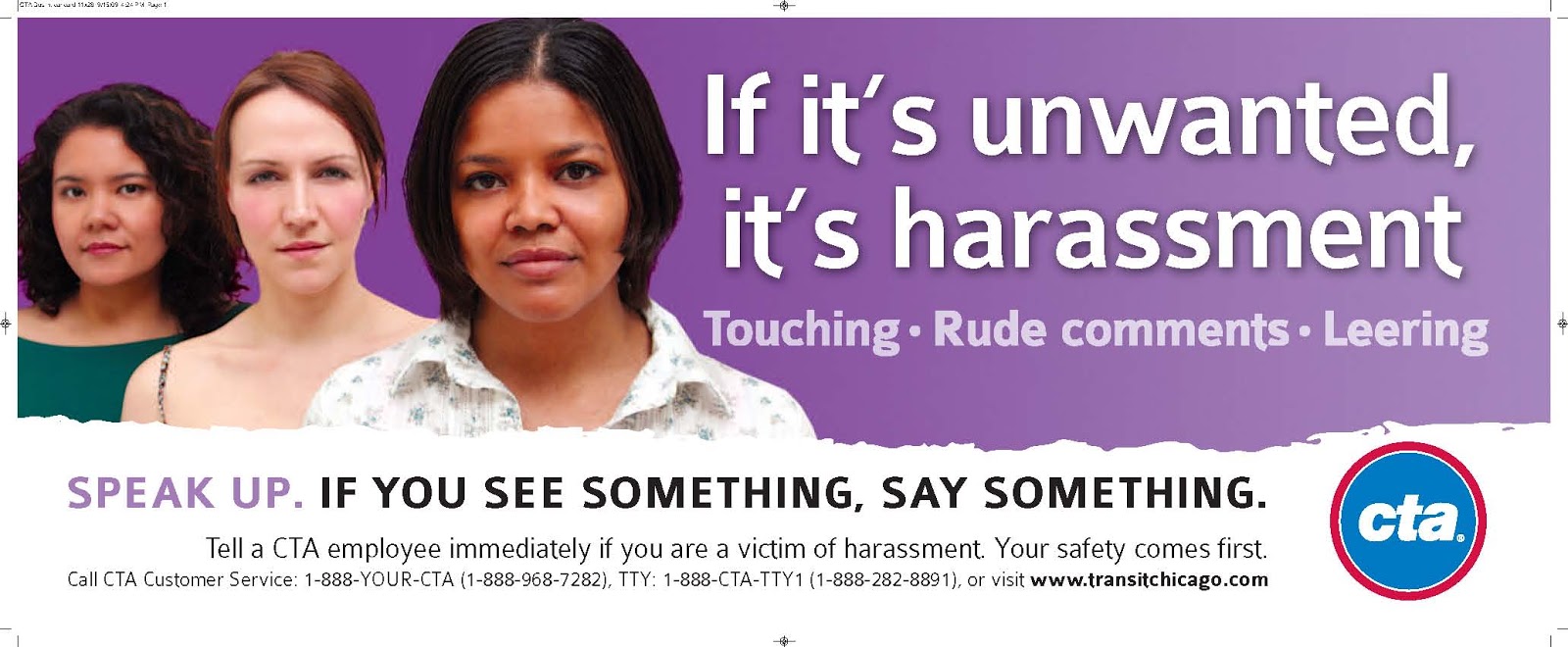
One interesting outcome of feminist activists demanding better anti-harassment measures by public transit companies in the last couple of years is the 'discovery' that these policies and laws stand to benefit more than just women.
While this feature article from the Chicago Tribune is expressing a frustration that it hasn't gone far enough, the author is framing his call to action around panhandling on the Chicago Transit Authority's anti-harassment campaign launched in 2009. He notes, "The public relations effort amounted mostly to informational placards on buses and trains telling transit customers to report behavior that is physical or threatening" and then he challenges his readers to do just that to report panhandlers to CTA officials and Chicago police, if necessary.
The CTA's anti-harassment campaign, then becomes a tool for challenging disturbing behavior of many sorts, not just gender-based harassment.
 Of course, as this comment left on a NYT article makes apparent, this approach can go too far...
While this feature article from the Chicago Tribune is expressing a frustration that it hasn't gone far enough, the author is framing his call to action around panhandling on the Chicago Transit Authority's anti-harassment campaign launched in 2009. He notes, "The public relations effort amounted mostly to informational placards on buses and trains telling transit customers to report behavior that is physical or threatening" and then he challenges his readers to do just that to report panhandlers to CTA officials and Chicago police, if necessary.
The CTA's anti-harassment campaign, then becomes a tool for challenging disturbing behavior of many sorts, not just gender-based harassment.
Thursday, February 28, 2013
Pink Taxis
Another recent effort at "women-only" spaces/services...
What do you think...would you go for the pink taxi if you could?

What do you think...would you go for the pink taxi if you could?
Friday, February 22, 2013
Subscribe to:
Posts (Atom)

The last thread, available by link, was unbelievable in that regard. There’s a difference between the fear, humiliation and self-loathing that can be brought on by sexual aggression and being irritated by a musician or having near a person with dirty clothes. If you’re the sort of jerk who wants to enforce your perfectly harmonious environment on everyone around you, please, get a car and act like that jerk inside it. The subways are public, and that ought to include a little freedom of expression, not to mention a little tolerance for those who have no where else to go, or no other way to get there.
People don’t keep their life’s possessions in shopping bags in order to offend you. They do it because they don’t have your nice apartment. Deal.
— Jordan